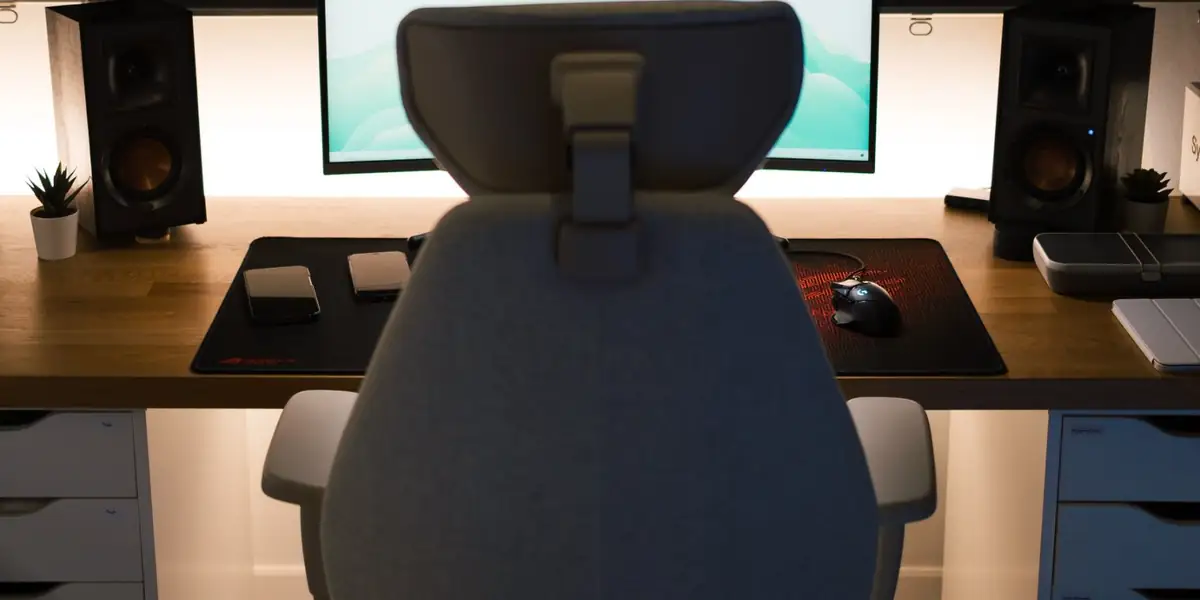
Quick Verdict: Embody or Gesture?
Choose the Herman Miller Embody if you sit for very long stretches, change position constantly and want a seat that spreads pressure and encourages movement. Choose the Steelcase Gesture if you want unmatched arm adjustability for laptops, tablets and phones, a 400-pound rating and an easy seat depth knob. The Embody is the comfort specialist for marathon days; the Gesture is the most adaptable chair for mixed work and shared use.
Embody vs. Gesture at a Glance
| Herman Miller Embody | Steelcase Gesture | |
|---|---|---|
| Seat | Pixelated four-layer seat | Padded foam |
| Backrest | Narrow spine-and-ribs | 3D LiveBack |
| Lumbar | Passive (BackFit angle) | Gentle; optional height adjustment |
| Seat depth | 15"–18" | About 15.75"–18.75" |
| Arms | Height, width | 360-degree |
| Headrest | No | Optional |
| Weight capacity | 300 lbs | 400 lbs |
| Check price | Check Latest Price | Check Latest Price |
Two Chairs Built Around Movement
The Embody and Gesture share a philosophy: both were designed around how people actually move while they sit, rather than around a single ideal posture. The Embody focuses on micro-movements and pressure distribution through its pixelated seat and back. The Gesture focuses on the many postures people adopt when using different devices, supported by its remarkable arms.
Seat and Back Comfort
The Embody's seat and back sit on a matrix of small pixels that respond individually as you move, spreading your weight and reducing pressure points. Its narrow back leaves your shoulders free. Many owners consider it one of the most comfortable chairs for long sessions.
The Gesture's padded seat is supportive and dense, and its 3D LiveBack flexes and twists with you. It feels more like a traditional, well-made office chair.
Winner: the Embody for long-session comfort.
Arms and Device Use
The Gesture's 360-degree arms are the best on any chair we cover, swinging in to support you while holding a phone or tablet and spreading wide when you want space. The Embody's arms adjust in height and width with a generous range but lack depth and pivot.
Winner: the Gesture.
Lower-Back Support
Neither chair offers a firm, dial-in lumbar pad. The Embody relies on its BackFit angle adjustment and spine-like back; the Gesture relies on its contoured LiveBack with an optional height-adjustable lumbar. People who want pronounced lumbar support should consider the Leap V2 or Aeron.
Winner: a draw.
Fit and Capacity
Both chairs fit a wide range of people from a single frame with seat depth adjustment. The Gesture is rated for 400 pounds versus the Embody's 300, which makes it the safer choice for larger users.
Scale 14" to 20". Manufacturer-published ranges.
Manufacturer-published figures.
Winner: the Gesture.
Gaming and Mixed Use
Both chairs are popular with people who work and game at the same desk. The Embody even comes in a gaming edition made with Logitech G. The Gesture's optional headrest and deep recline suit people who lean back between sessions.
A Day in Each Chair
Focused Work
In the Embody, you set the BackFit angle so the spine-like backrest follows your curve, adjust seat depth and lock the tilt limiter for typing. The narrow back leaves your shoulder blades free, which many people notice immediately. In the Gesture, you turn the seat depth knob, set the arms level with the desk and lock the back upright. Its wider back gives you a more enclosed, supported feel.
Switching Devices
When you pick up a phone or tablet, the Gesture's arms really pay off: they swing inward to support your forearms so your shoulders stay relaxed. The Embody's arms adjust in height and width only, so device use relies more on your lap or the desk.
Long Afternoons
Late in a long day, the Embody's pixelated seat is where it earns its reputation. Pressure stays spread out and the seat responds as you shift, so many owners notice less fatigue. The Gesture remains comfortable and supportive but feels more like a conventional, well-padded chair.
Setup and Learning Curve
The Embody has fewer controls, but its pixelated seat can take a couple of weeks to feel natural, since some people initially notice the individual pixels. The Gesture's controls are intuitive and grouped on one side, and most people find a comfortable setup within minutes.
Long-Term Ownership
Both chairs are built for many years of heavy use. Herman Miller covers the Embody for 12 years of round-the-clock use. Steelcase covers the Gesture's frame for the original owner's lifetime and most other parts for 12 years. Both typically ship fully assembled.
Looks and Space
The Embody's exposed spine and ribs give it a technical, futuristic look that suits modern home offices and gaming setups. The Gesture has a cleaner, more traditional silhouette with many upholstery options and an optional headrest. Both are large, substantial chairs, so measure the space behind your desk before buying.
Other Chairs to Consider
Herman Miller Aeron
- Seat: 8Z Pellicle mesh
- Arms: Height, depth, pivot
- Lumbar: PostureFit SL (height + depth)
Our #1 pick, the Herman Miller Aeron, adds adjustable PostureFit SL support and cooling mesh.
Haworth Fern
- Seat: Edgeless foam seat
- Arms: 4D (on upgraded models)
- Lumbar: Optional height-adjustable
The Haworth Fern shares the movement-friendly philosophy of both, with a tall, flexing back and an optional adjustable lumbar.
Which Should You Buy?
| If You… | Choose |
|---|---|
| Sit eight-plus hours and fidget constantly | Embody |
| Use phones and tablets a lot | Gesture |
| Weigh more than 300 lbs | Gesture |
| Want a headrest | Gesture |
| Want the softest, most pressure-relieving seat | Embody |
| Want firm lumbar support | Neither; see the Leap V2 or Aeron |
Read our full Embody review and Gesture review, or see how both compare with our #1 pick in Aeron vs. Embody and Aeron vs. Gesture.
Embody vs. Gesture FAQs
Which Is Better for Long Hours?
Both are excellent; the Embody's pixelated support is particularly well suited to very long sessions with frequent movement.
Which Has Better Armrests?
The Gesture, whose 360-degree arms have the widest range of any chair we cover.
Which Is Better for Gaming?
Both work well. The Embody has a dedicated gaming edition; the Gesture offers a headrest and deep recline.
What Are the Weight Capacities?
The Embody is rated for 300 pounds and the Gesture for 400.